A background can fit across a room and still leave no workable place for the camera or subject. Mark the intended background line on the floor, then mark where the subject and camera would stand. Include space for lights, cables and a clear route out of the room. The distance between subject and background affects shadows and how much background appears in the frame.
For a small object, a board or tabletop sweep may be sufficient. A roll extending from a vertical support onto the table creates a continuous curve, but its lower edge must remain secure. For a standing person, a narrow board will not cover movement or a wider composition. Test the required frame with a temporary plain surface before buying a support system.
Count the footprint
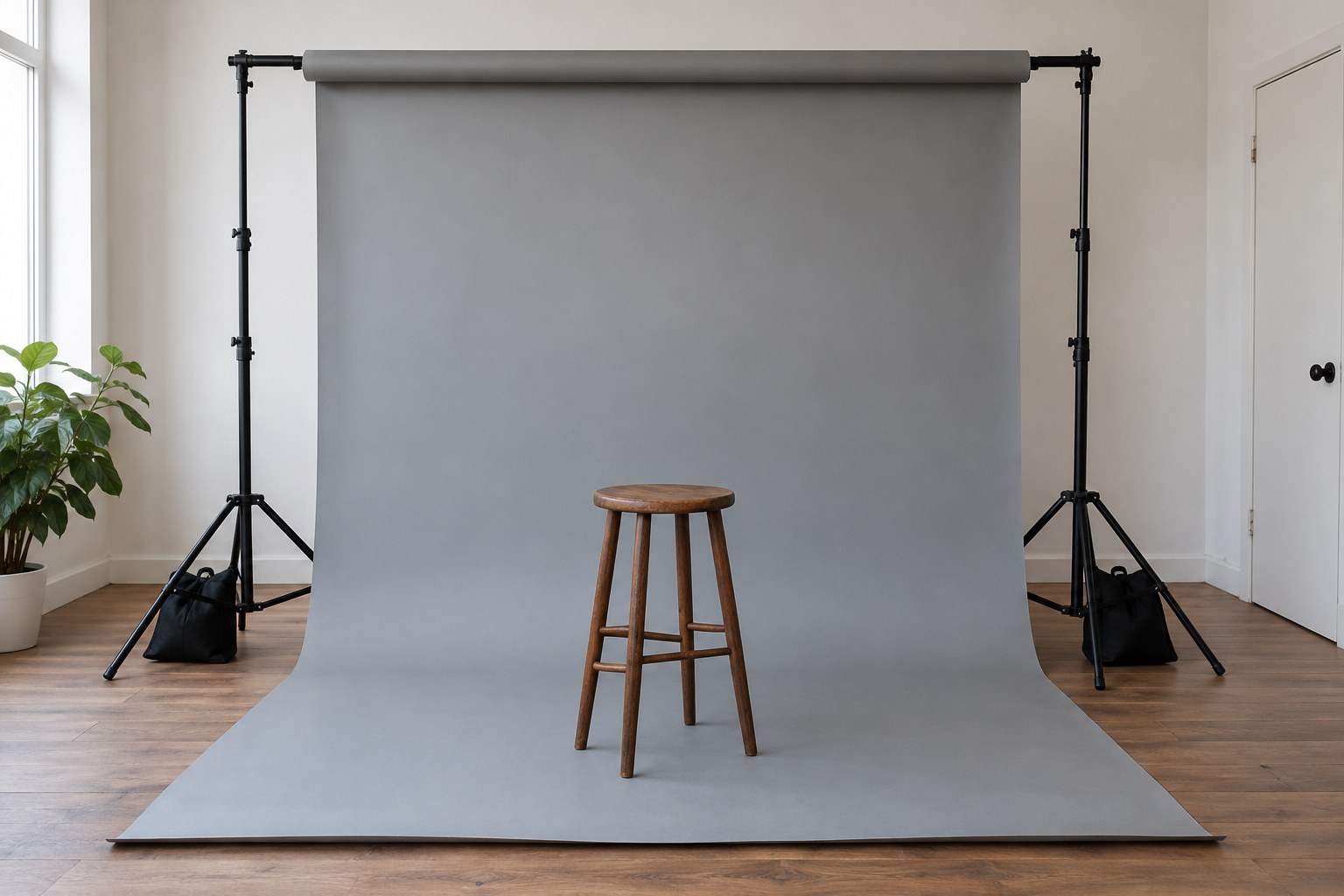
Freestanding background stands occupy more floor area than their upright poles suggest. Their legs can interfere with furniture, subject movement and light stands. Check the manufacturer's load limits, required extensions and stabilisation instructions with the actual roll or fabric you intend to use. A wide paper roll has weight and leverage; a support intended for a light cloth may not be suitable.
Wall or ceiling mounting saves floor space but requires a suitable structure and installation method. Do not assume that a visible plaster surface can carry the load. If the fixing requirements are uncertain, use an appropriate qualified installer or choose a system that does not depend on those fixings. A temporary clamp is only as secure as both the clamp and the furniture to which it is attached.
Fabric folds, paper damage and surface reflections are separate from the support itself. Hang the chosen material and photograph it with your planned lighting. A background that looks smooth to the eye can show creases under side light. Moving the subject forward may reduce a hard shadow, but only if the room permits it.
Make setup and storage part of the test. If every session requires moving essential furniture and blocking a doorway, a smaller tabletop arrangement may serve you better. Store rolls so they do not become obstacles or develop avoidable damage, following the material supplier's advice. The right support creates a repeatable working space, not simply the widest possible backdrop.