Measure the lens in its travelling configuration: rear cap fitted, front cap on, and hood reversed if that is how it will be stored. Dimensions quoted for a bare lens can underestimate the space required. A pouch that closes only when you press hard on the cap is too tight; one that lets the lens tumble around needs a better fit or an appropriate divider.
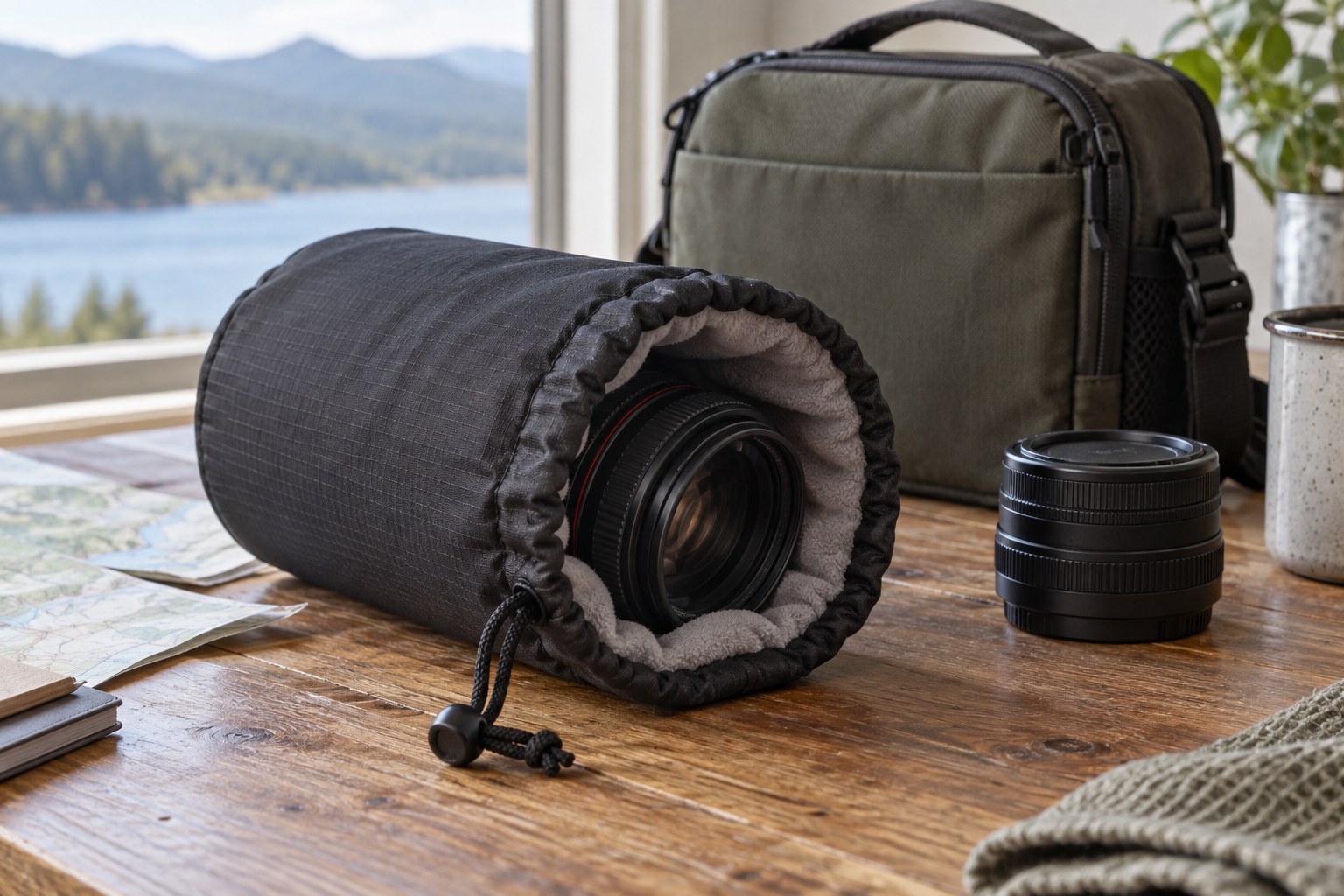
The pouch has two jobs that are easily confused. Padding cushions ordinary contact inside a bag, while a closure keeps dust and loose items away from the lens. Neither automatically makes the pouch waterproof or suitable for an unprotected fall. Read the actual product description if weather protection matters. Keep a separate rain cover or dry storage option when the entire bag may get wet.
Try placing the pouch in the bag with your other essential items. It should not force a battery or plug against the lens barrel. Keep keys, coins and cleaning liquids elsewhere. A soft pouch can conform to an awkward gap, whereas a more rigid case protects its own space but may waste room. The useful choice is the one that preserves access without transferring pressure from surrounding objects.
Rehearse a lens change indoors
Open the bag where it would sit during a walk and remove the lens with one hand while the other supports the camera. If the drawstring snags, the cap falls away or the pouch pulls a second item out with it, rearrange the kit. Do not practise over a hard floor. A stable table makes the rehearsal less consequential and lets you see where each cap needs to go.
Decide where the removed lens will be placed before detaching it. Leaving an empty pouch buried at the bottom of the bag defeats its purpose. If you use only one extra lens, keep that space available throughout the outing rather than filling it with purchases or clothing.
After a damp day, open the pouch and allow it and the equipment to dry appropriately before long-term storage. A protective sleeve can hold moisture as efficiently as it excludes dust. The final packing test is simple: carry the complete bag for several minutes, then retrieve the lens without unpacking the whole kit. Protection that prevents access may encourage hurried, awkward changes later.