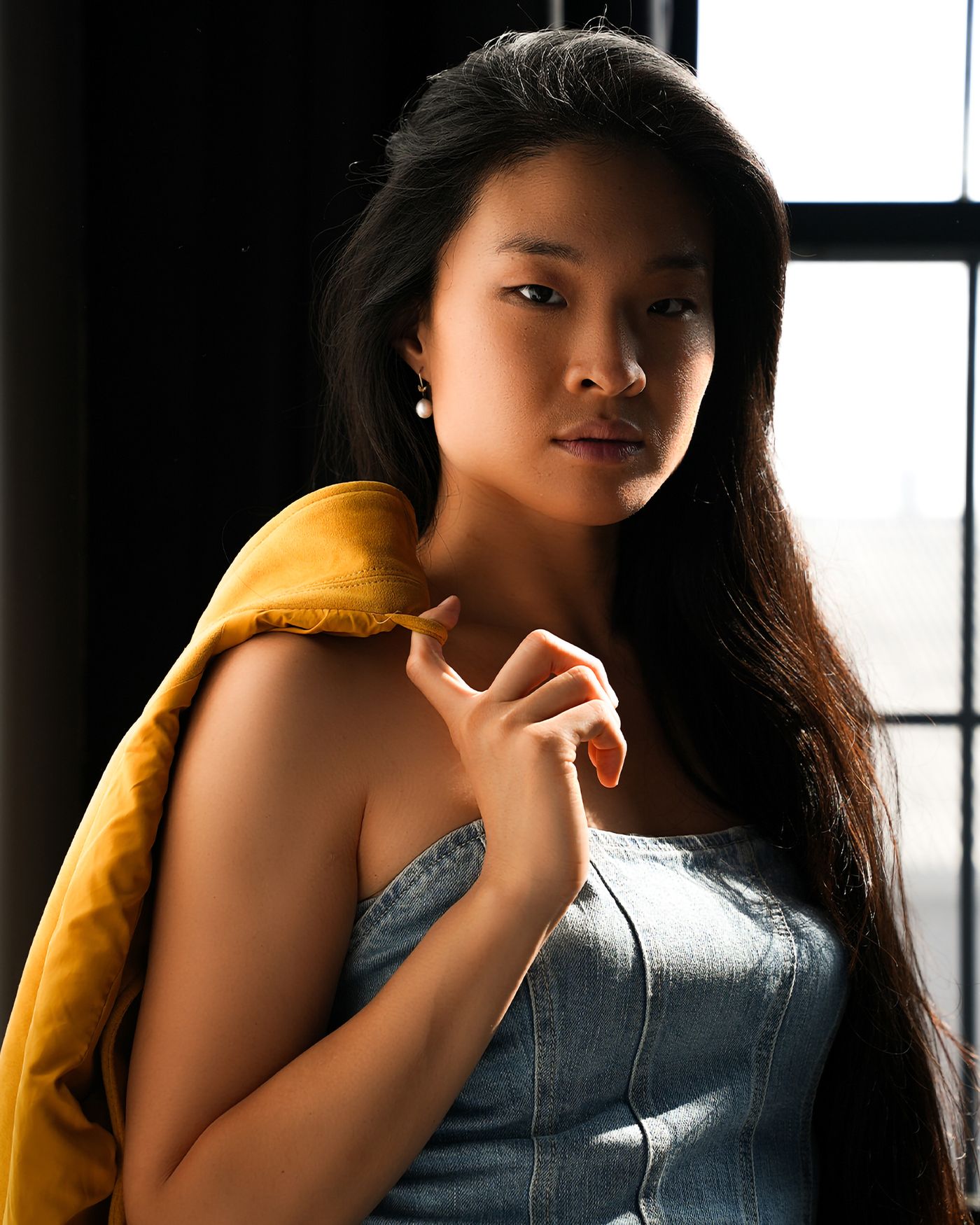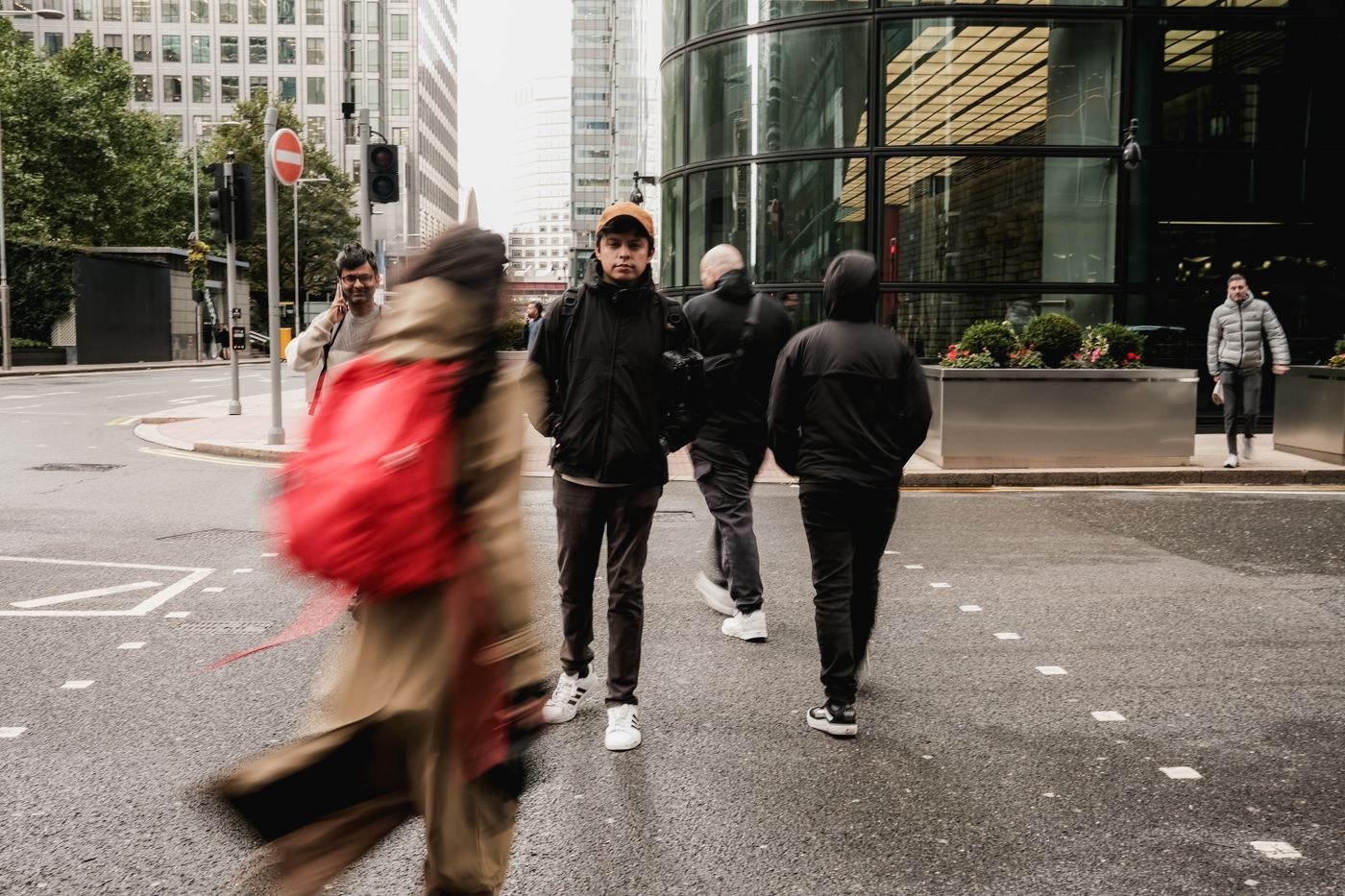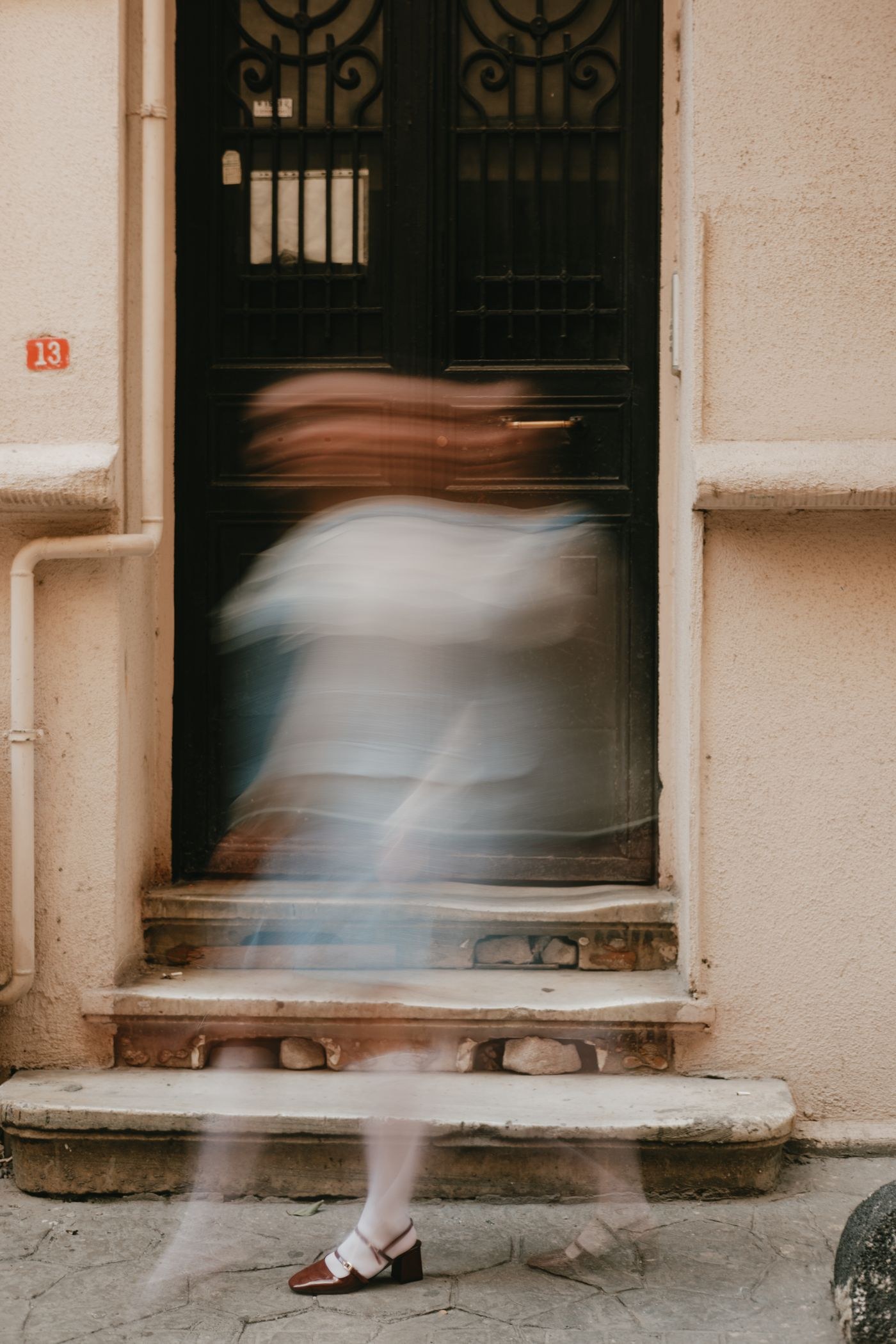
Sideways movement changes a person's position in the frame quickly, even when their distance from the camera stays fairly constant. That makes composition and timing as important as focus. Choose the area where the picture will work before the person arrives, then prepare to keep them inside it.
Look for a background that separates the face and clothing. A dark jacket may disappear against a shadowed doorway but read clearly against a pale wall. Leave room in the direction of movement unless you deliberately want tension at the frame edge. Keep poles and bright signs away from the point where the head is likely to pass.
Choose between freezing and following
For a crisp figure, begin with a short exposure and review the fastest-moving parts, such as hands and feet. The required speed depends on distance, movement and framing; a nearby crossing subject needs more care than a distant one. Continuous autofocus can follow the person, but keep its area on them rather than letting it jump to the background.
For a panned picture, use a longer exposure and rotate the camera smoothly with the person. Begin following before releasing the shutter and continue afterwards. The aim is to reduce the person's movement relative to the camera while allowing the background to streak. A face may remain clearer than swinging arms and legs, which can strengthen the impression of motion.
Try a short sequence at one shutter speed, then compare a somewhat faster and slower version. Change exposure settings to keep brightness similar. Do not expect every panned frame to succeed: the alignment between your movement and the subject varies. Judge the best frame by a readable face or torso and a coherent direction of blur, not by whether every detail is sharp.
If the person follows a predictable path, preselect a useful capture area and watch them enter it. You can use continuous focus or focus in advance at that distance, depending on the depth and aperture. Prefocusing is less forgiving when the path moves closer or farther away. Confirm the actual result rather than assuming a marked spot guarantees focus.
Keep your own position safe and stationary enough to concentrate. Do not step backwards into a road while looking through the viewfinder. For a planned session with a friend, repeat a short clear route and discuss the movement between attempts. A controlled path makes it easier to improve one variable at a time.