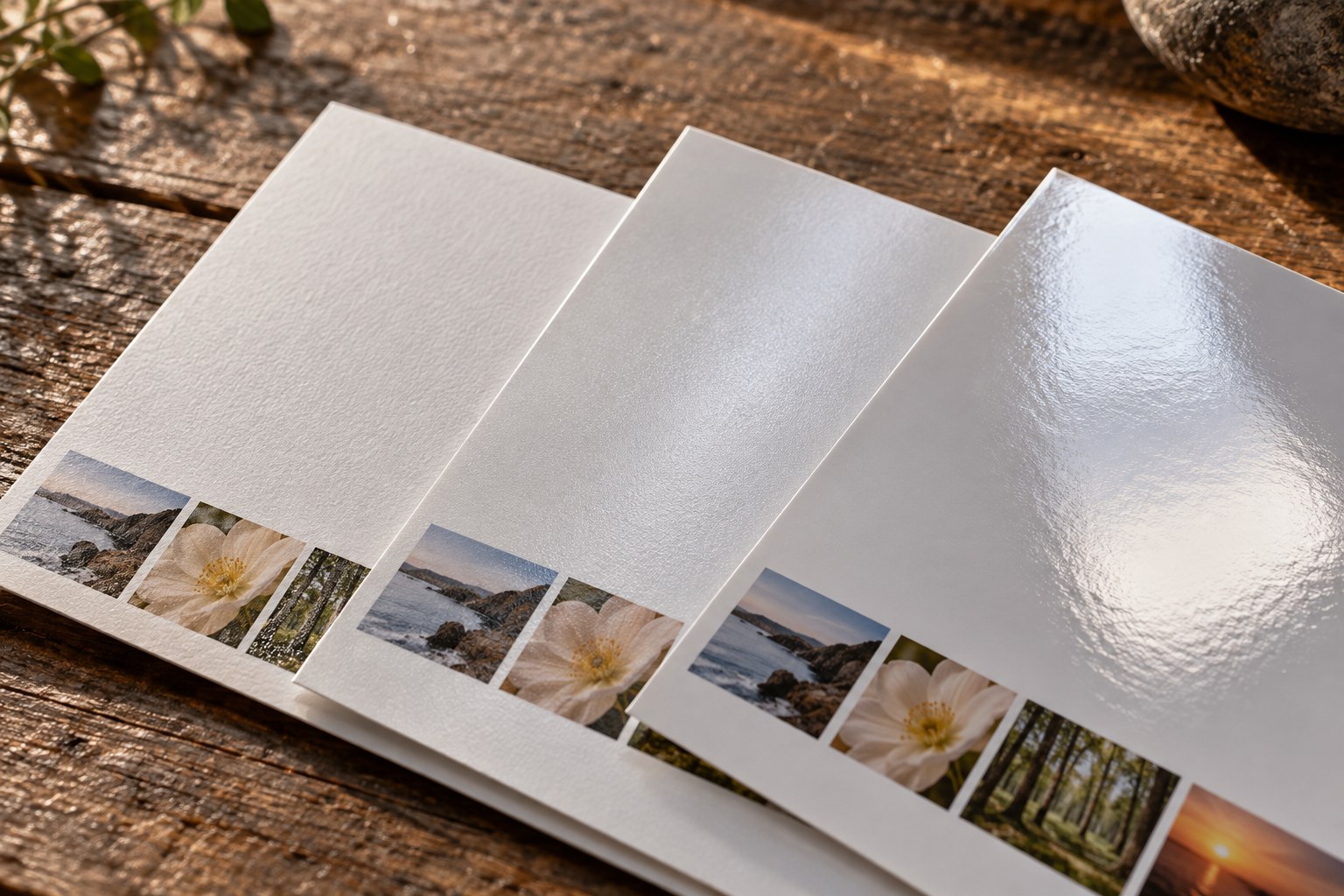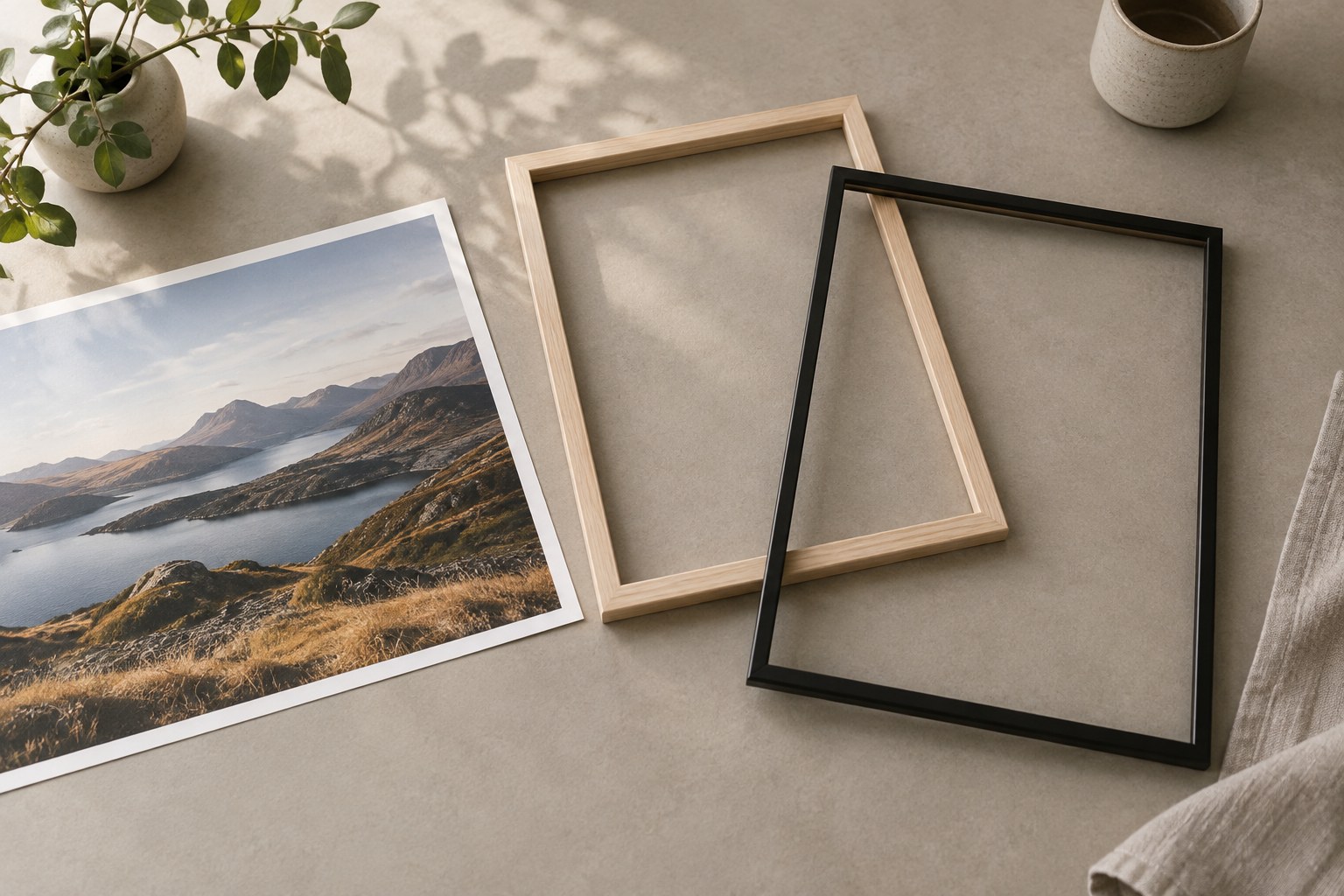
A frame introduces another set of lines and surfaces around a photograph. It can make the image feel contained, connect it with a room or compete with its subject. Begin by looking at the photograph without a frame. Identify the darkest and lightest areas, the dominant colour and whether important shapes approach the edges. These features will interact with the frame more directly than a label such as modern or traditional.
Place sample corners or simple paper strips beside the print. Compare a small number of plausible choices rather than every finish in a catalogue. A narrow dark edge may strengthen a pale image but make a dark image feel heavier. A warm wood surface may relate to a colour in the photograph or introduce an unrelated colour cast around it. Judge the actual combination under ordinary light.
The mount changes the relationship
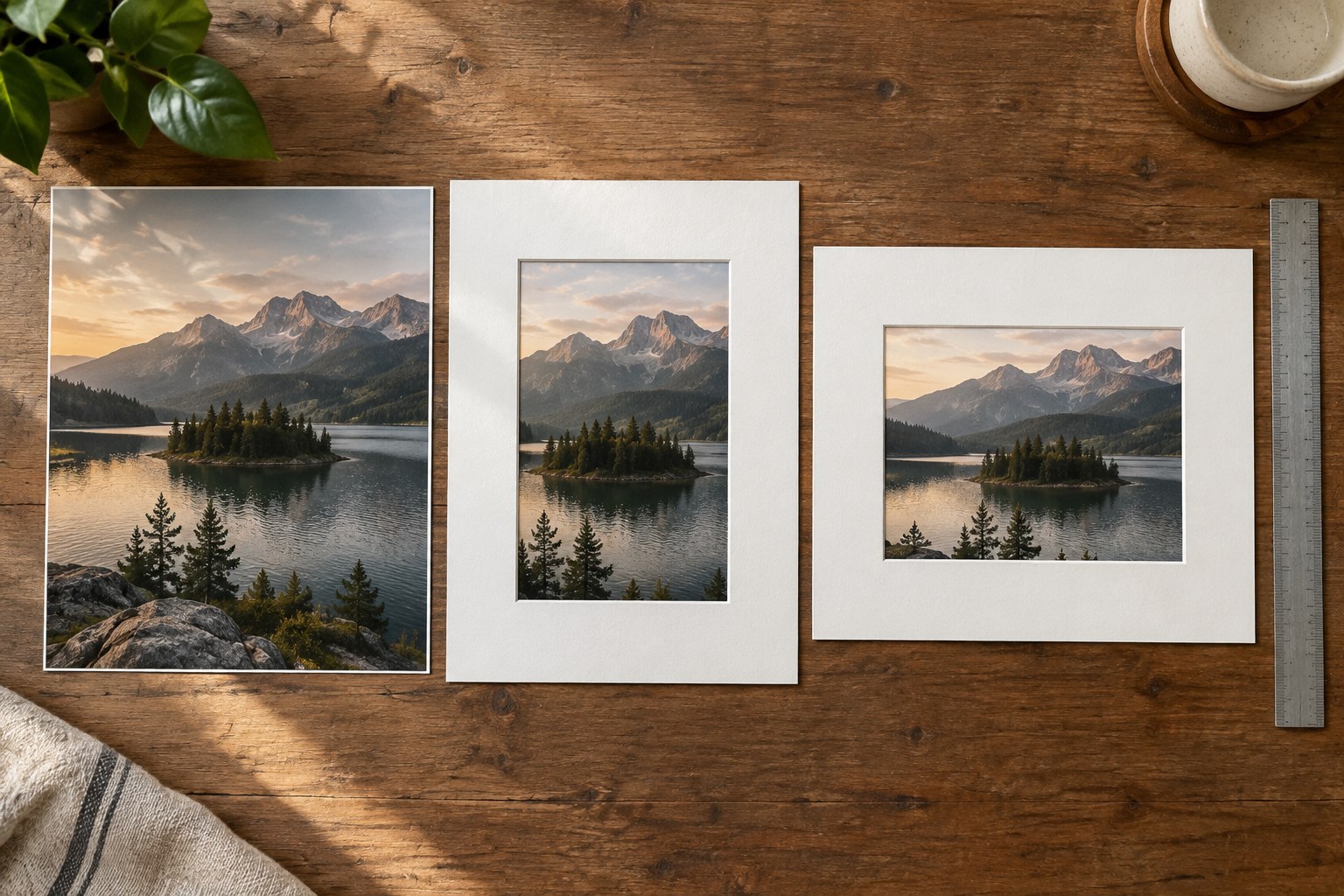
A mount separates the image from the frame and can provide room around a dense composition. Its width is not just a decorative setting. A very wide mount makes the photograph physically smaller within the same outside dimensions; a narrow one brings the frame's visual weight closer to the image. Test both with paper cut to size.
Compare the mount's colour with the paper's visible border. Two whites can look unexpectedly different when placed together. Decide whether the distinction is intentional. If the mount opening covers part of the image, make sure it does not remove a carefully chosen edge or leave a narrow, uneven line of unprinted paper.
For a group of photographs, the frames can share one property without being identical in every respect. A common finish or outer depth may connect different image sizes. Before choosing mixed frames, lay the group out together and check whether the variation supports the pictures or becomes the main subject of the arrangement.
Check the complete object
Glazing adds reflections and affects how the framed image is seen from an angle. Compare options in the intended room when possible. A sample that looks clear under a shop's lights may reflect a nearby window at home. The position of the frame and the light source matter as well as the glazing specification.
Ask how the photograph will be held and which materials touch it. For valued or irreplaceable prints, seek framing guidance appropriate to the photographic process rather than accepting an unspecified adhesive as a default. The decorative moulding tells you little about what happens behind the mount. Keep the print's dimensions and any care instructions available when discussing the job.
Finally, consider the side view and the wall. A deep frame casts a different shadow from a shallow one and may project into a narrow passage. Confirm the finished weight and mounting method before ordering. These practical details can rule out an attractive sample that would be awkward in its intended place.
Choose the frame after returning attention to the photograph. If the first thing you describe is always the frame's texture or shine, reconsider whether that is the effect you want. The frame need not disappear, but it should participate in the presentation rather than replace the image as its reason for being there.