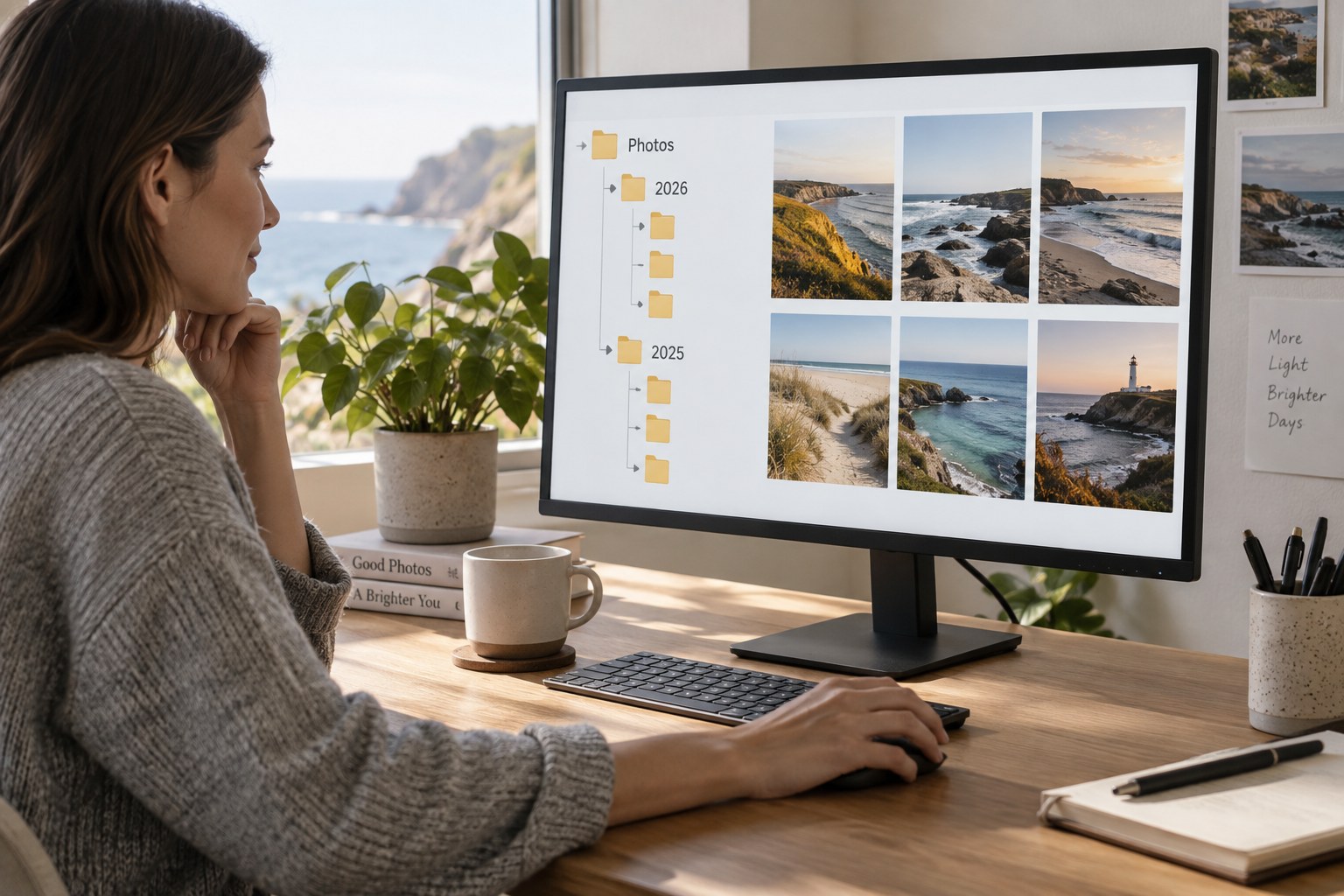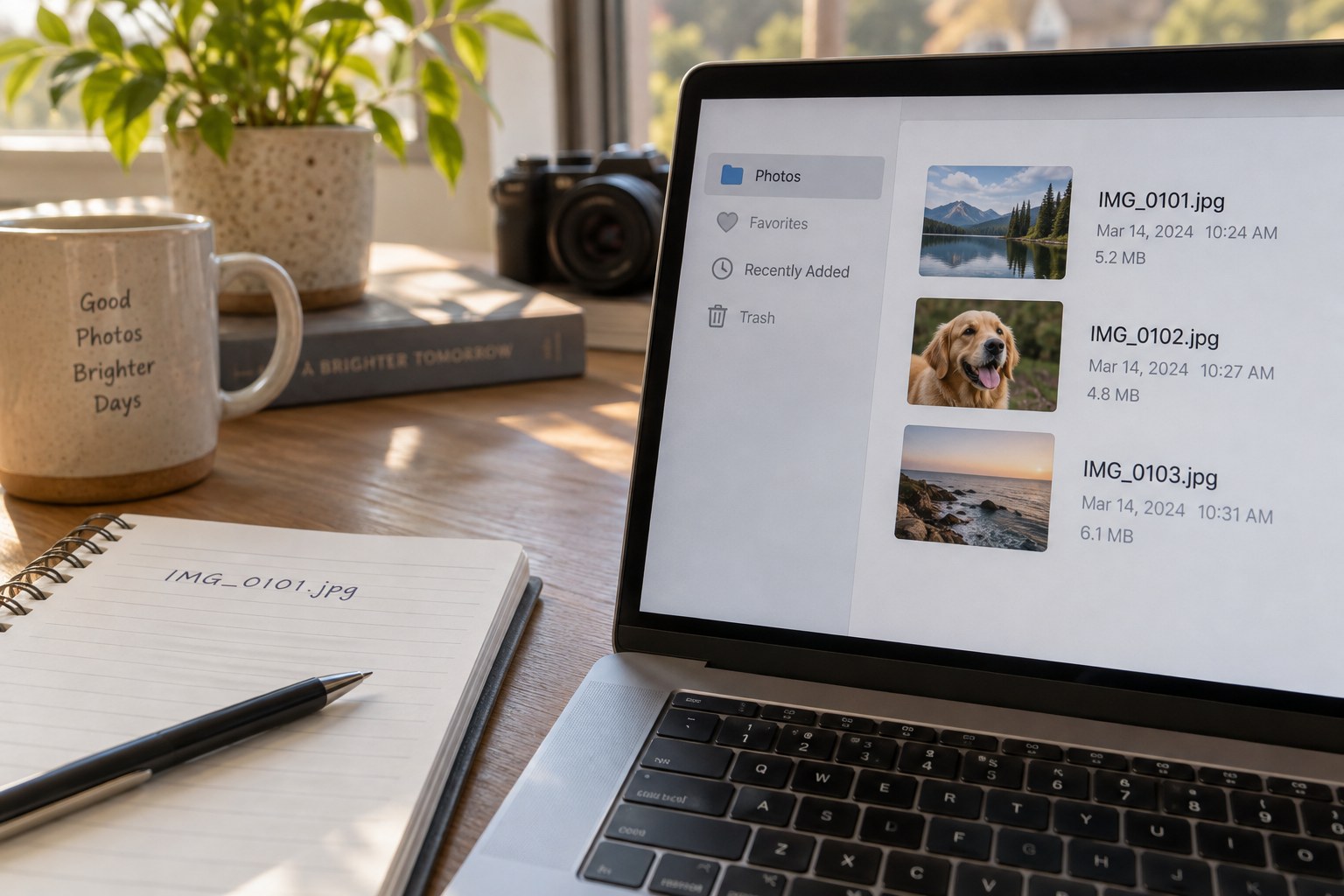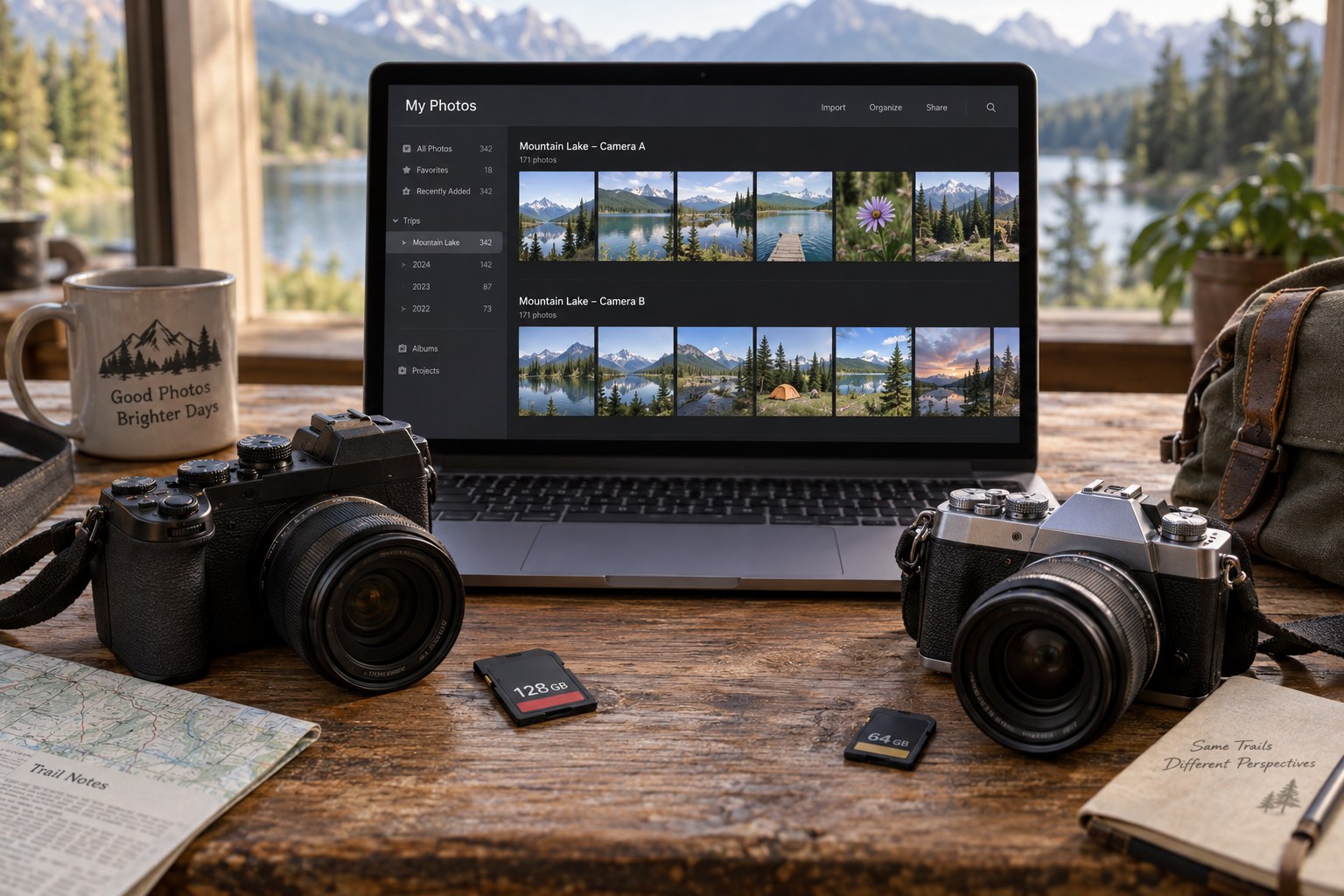
Copy files from each camera into a clearly identified source folder or use an import scheme that records the camera identifier. Two devices can generate the same filename, so do not merge them into one flat folder with automatic overwriting. Keep a verified backup of the original transfers before correcting times or renaming files.
Check the clocks before the event when possible. Photograph the same reliable time display with each camera, or make a simultaneous reference frame. Include the time zone in your notes if travel crosses zones. A clock that displays the same hour can still be set to a different date or have a minute offset that becomes obvious during a fast sequence.
Correct the timeline with evidence
If the photographs already exist, find a shared moment visible in both sets. A speech, a candle being lit or a distinctive action may provide a reference. Estimate the offset and test it on a small selection before applying a batch correction. Record the original and corrected values. Do not invent exact timing when the evidence only supports approximate order.
Use the software's capture-time adjustment when available and understand whether it changes catalog information, embedded metadata or both. A file's operating-system modification date is not a dependable substitute for capture time, because copying or editing can change it. Keep the unmodified source backup so a mistaken correction can be reversed.
After aligning the clocks, sort a combined collection and inspect transitions between cameras. Check the start and end of the event, because a single reference may not reveal every issue. Some devices may have been reset or changed manually during the day. Divide those files into appropriate groups rather than applying one correction to all of them blindly.
When clocks cannot be aligned exactly
A phone may record a different time convention from a camera, and exported copies may omit the original capture metadata. If no shared reference survives, use a broad sequence based on visible events rather than assigning invented seconds. Keep a note that the order is editorial. This is especially useful when photographs from several family members are combined long after a trip.
Separate a factual timestamp correction from a chosen narrative order. You might place a detail before the wide view even though it was photographed later; that does not require changing the capture time to make the sequence sort. Use a collection order or numbered exports instead. Preserving recorded timing while presenting a deliberate sequence keeps the archive honest and makes it easier to reconstruct the actual event if that becomes important later.
Keep visual differences separate from time
Different cameras may render colour and contrast differently even under the same light. Choose a representative image from each and adjust them toward a coherent interpretation where appropriate. Do not synchronise every edit across files with different exposure or lighting. Temporal order and visual consistency are related editorial tasks, but fixing one does not automatically fix the other.
Preserve the source camera identifier in filenames or metadata if it helps future troubleshooting. It can explain why a file has a different resolution, format or lens view. Use collections or albums to present the combined event without destroying the source organisation. This makes it possible to revisit one camera's files if a time correction or import problem is discovered later.
Export the final sequence with an explicit ordering convention if the destination displays filenames rather than capture time. A numbered derivative set can preserve the chosen story while leaving original names intact. Check the exported files in the actual viewing environment. The successful combined collection is both readable as one event and traceable back to the devices that recorded it.