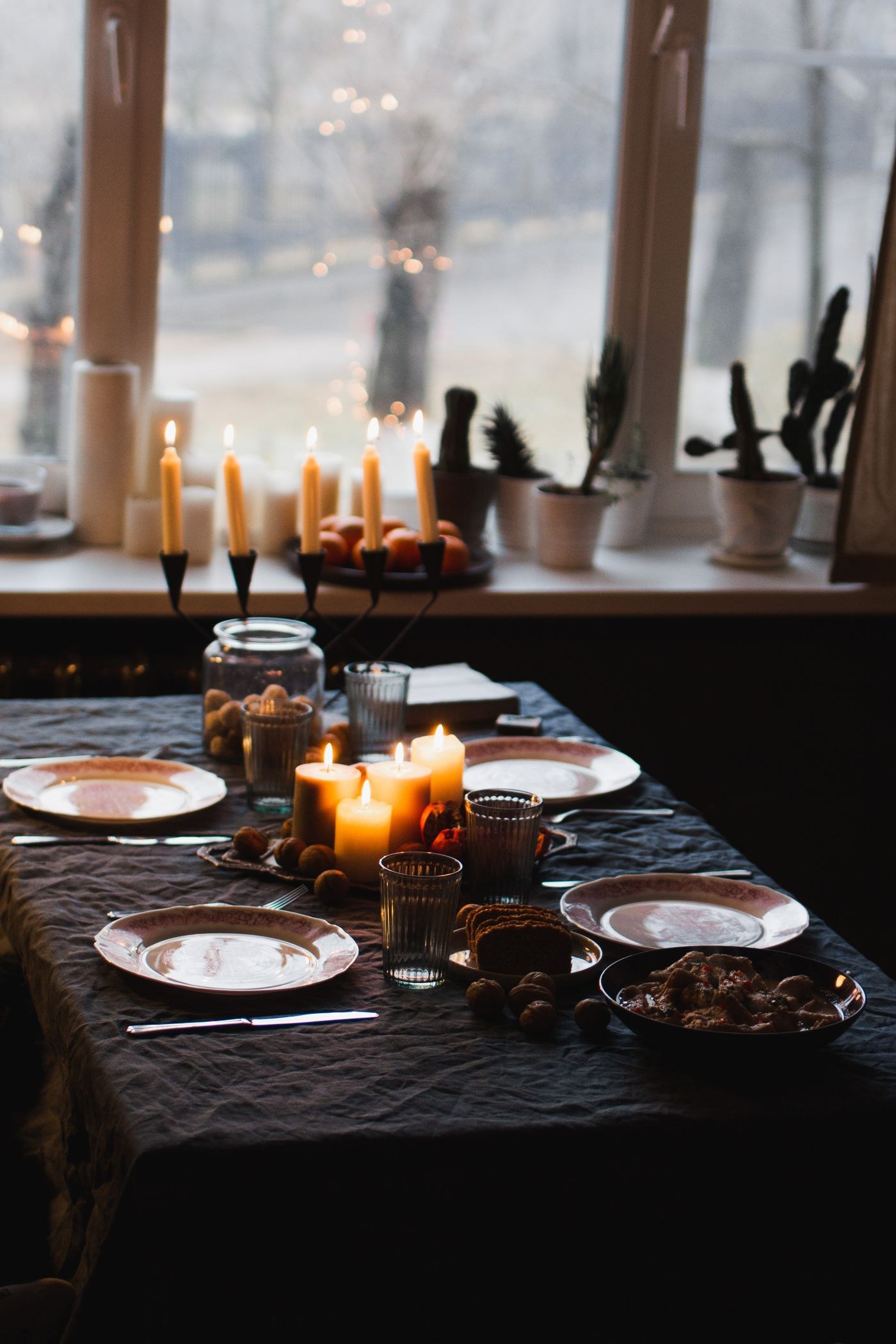
A candlelit table contains an extreme difference between the flame and the objects around it. Exposing to preserve every part of the flame can make the table almost invisible, while exposing the plates generously may leave the flame without detail. Decide what the photograph is about: the candle itself, a still arrangement, or people sharing the table. Each choice requires a different compromise.
Keep candles in stable holders and clear of curtains, paper decorations and equipment. Do not move a burning candle into an unsafe position merely to improve a reflection. Arrange the composition before lighting it where possible, and keep the working area clear enough that nobody has to reach across a flame to adjust the camera.
Give the dark areas a little help
For a still table, support the camera and allow a longer exposure. The plates and cloth can remain sharp while the flame changes shape during the exposure. If the flame becomes an oversized smear, shorten the time and raise ISO. A tripod removes camera movement but does not freeze the flame or a person reaching for a glass.
A small amount of existing room light can make the table easier to record without destroying the candlelit feeling. Turn it down or move the arrangement so that it provides gentle fill rather than becoming the main source. Watch for a second colour cast on white plates. If the room light is much cooler than the candles, decide whether that contrast feels intentional or distracting.
Set focus on an important object with a clear edge. Autofocus may struggle on a dim, plain tablecloth, and the bright flame can attract attention away from the subject. Use magnification to check a glass rim or a place setting. Choose an aperture that covers the necessary objects instead of opening the lens fully by habit.
White balance determines how much warmth remains. An automatic neutralisation can remove the amber atmosphere you wanted, while an excessively warm setting can make food and skin uniformly orange. Make a reference frame and compare a few restrained interpretations later. Raw capture is useful for this choice, although it does not fix clipped highlights or motion blur.
Check reflections in glasses and polished cutlery. A slight camera movement can separate a bright reflected flame from the edge of a plate. Make one wider frame showing the relationship between candles and table, then a closer detail if it adds a different idea. The best exposure is the one that preserves the intended atmosphere while leaving the main subject understandable.