Choose a safe, stable viewpoint with a clear route back before considering the photograph. Check local conditions and access information, and avoid extending a session because a promising patch of light might arrive. Mountain weather and visibility can change faster than a composition improves. The camera should be ready within the outing's safe limits, not become a reason to ignore them.
Find the main structure of the scene while the light is ordinary. A ridge, valley or line of overlapping slopes should hold the composition even without a bright sun patch. Check foreground rocks and the horizon edges. If the photograph depends entirely on one fleeting highlight, you may be left with a poorly arranged frame when the light moves elsewhere.
Follow the illuminated area
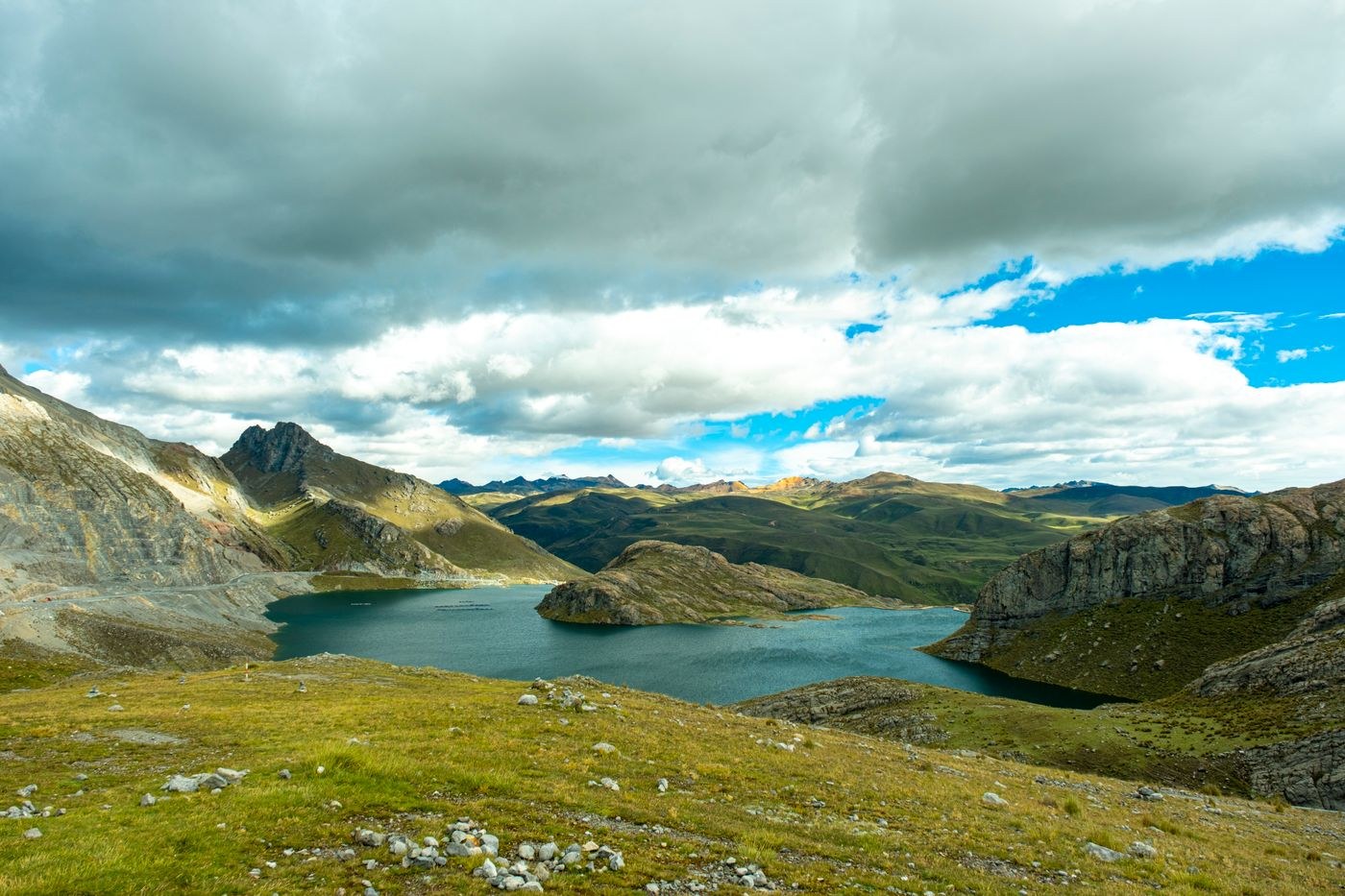
Watch the direction of cloud shadows across the landscape. A bright patch on a middle slope can separate it from the darker foreground and distant peak. The same patch on an unimportant corner may pull attention away. Make a frame when light supports the arrangement, then continue observing rather than immediately changing the composition.
Exposure may need adjustment as the brightest area changes. Check important highlights on snow, pale rock or cloud, not just the average landscape brightness. A fixed exposure can be useful for a short sequence under similar illumination, but it does not remain correct through every cloud break. Review the histogram and visible detail after a substantial change.
If the scene's brightness range exceeds what one frame can hold, decide which detail matters. Exposure bracketing may help for a static scene if you understand the later blending process, but moving clouds and vegetation can complicate the result. Take a usable single exposure as well. Do not assume that more frames automatically create a more natural image.
Compare photographs by the placement of light, not merely the amount of sunlight. A mostly shaded scene with one well-positioned bright ridge may be clearer than a fully illuminated view. During editing, retain the relationship between lit and shaded slopes. Lifting every shadow to the same brightness can erase the depth that the changing clouds gave you.