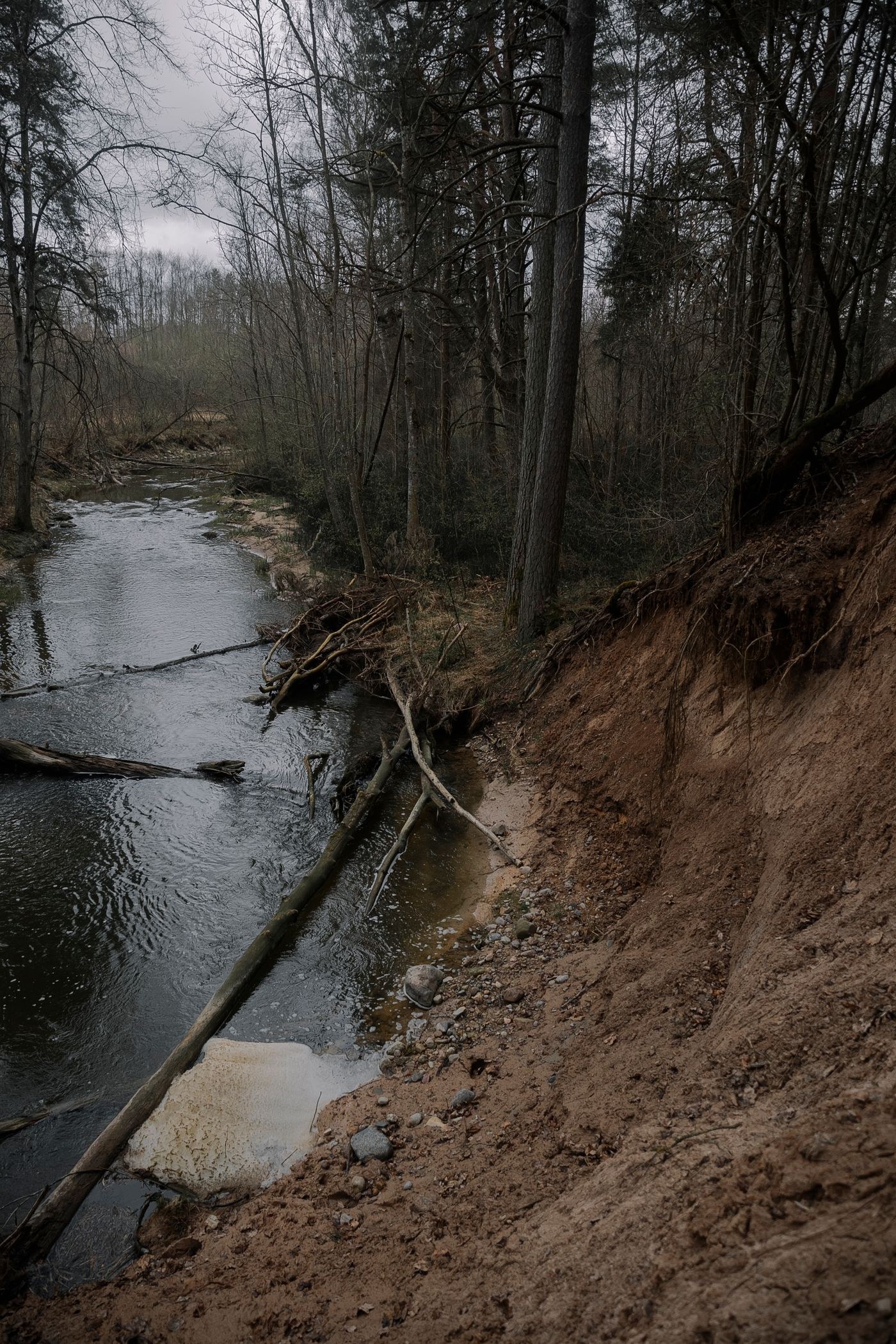
Start with a broad photograph that explains the relationship between water, bank and surrounding land. Choose a clear bend, a line of trees or a structure that gives the river direction. Keep the horizon and near edge deliberate. A wide frame with no organising feature may record the location without giving the viewer a route through it.
Move to a medium view from a safe established path. Isolate one relationship: reeds against open water, a mooring beside a wall or a tree leaning toward the current. The medium photograph should add information that was too small in the broad view. It should not simply crop the same scene without a new emphasis.
Let a detail finish the description
Look for a small subject that belongs to the place, such as a waterline on a post, wet stones or reflected branches near the edge. Stay on stable ground and do not climb down slippery banks for a closer angle. A longer lens or a different accessible section may provide the detail without changing your footing.
Water movement affects each scale differently. In the wide view, a little motion may be barely noticeable. In a close detail, it can erase a reflected line or change the shape of foam completely. Test shutter speed according to the particular frame rather than carrying one setting unchanged through the sequence.
Maintain a visible connection between the photographs. Similar light, a repeated colour or a recognisable material can link them. You do not need the same object in every image. If the close detail could belong anywhere and contributes nothing to the riverbank story, select another detail or omit it.
Review the set in order from wide to close, then try a different sequence. A close texture followed by the wider place can create discovery, while a broad opening may provide immediate orientation. Keep the arrangement that makes the relationship clearest. During editing, preserve the differences between reflective water and solid bank surfaces; applying the same strong texture adjustment to both can make the set feel less coherent rather than more consistent.