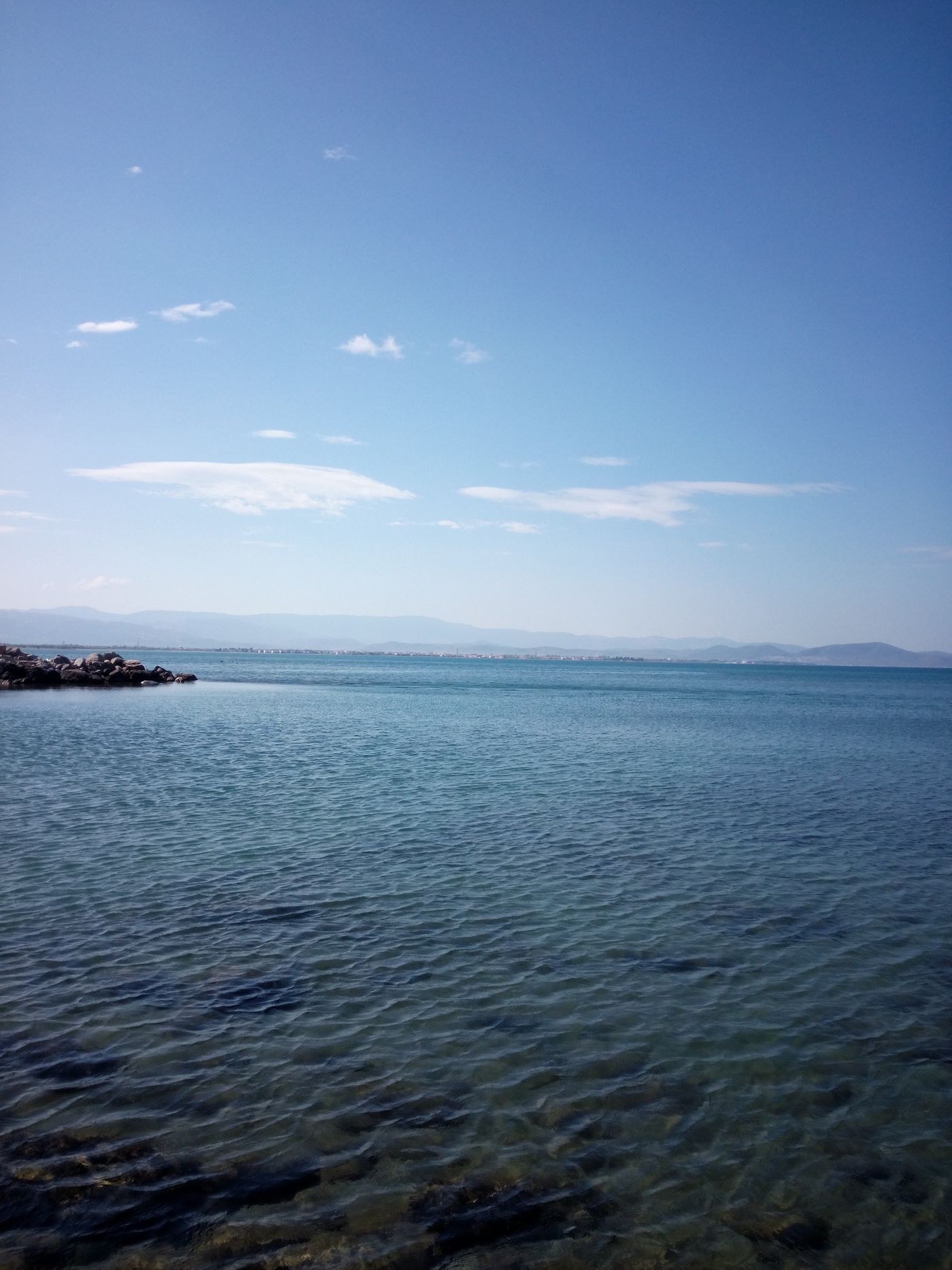
A horizon is more than a line to keep level. Its height controls how much attention the viewer gives to the ground and the sky. Placing it near the centre can create balance, while moving it high or low gives one area more weight. None of these positions is automatically correct; the useful choice depends on what occupies the space around the line.
Before raising the camera, name the part that interests you. If it is the pattern of clouds, give the sky room. If it is a line of rocks leading towards the distance, the foreground may need most of the frame. A rule-of-thirds grid can provide a comparison point, but it cannot tell you whether the extra sky or ground contains anything worth including.
Make three frames from the same position with the horizon low, central and high. Keep the focal length unchanged so that the comparison is mainly about placement. Inspect the corners of each frame. The low-horizon version may include empty sky, while the high-horizon version may introduce an unhelpful strip of grass at your feet. These edges often explain why one arrangement feels more coherent.
A centred horizon can work well with a reflection, especially when the upper and lower shapes form a deliberate pair. It can also make a quiet, flat landscape feel stable. Avoid moving the line away from the centre simply because you were told never to centre it. Instead, check whether the symmetry is strong enough to support the decision.
Consider what crosses the horizon. A person's head, a roof edge or the top of a tree can merge with it. Raising or lowering the camera may separate those forms without changing the horizon's overall role. Be careful with a very low viewpoint: foreground objects can grow large and hide the middle distance that connects the scene.
Use the camera's level or a visible reference to avoid an unintended tilt, but do not mistake a sloping shoreline for a level horizon. Sea horizons and architectural references provide different kinds of evidence. If you rotate the picture later, inspect the crop it creates; a correction may remove a useful foreground corner or crowd a subject.
The final test is simple: cover the upper or lower part of the image and ask what is lost. If a large area contributes nothing, change the framing or crop deliberately. A horizon position earns its place through the information and feeling on either side of it, not through its distance from a grid line.