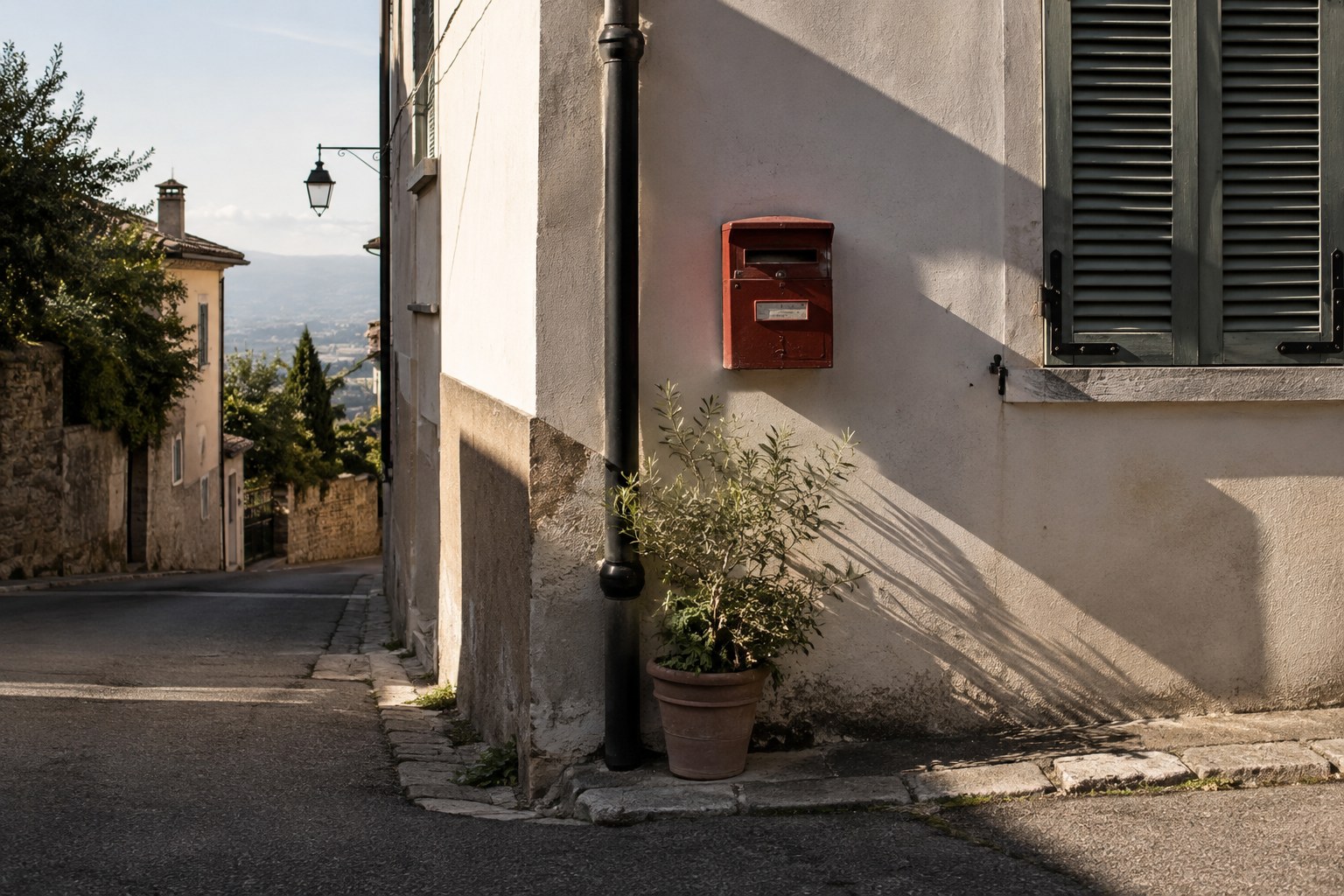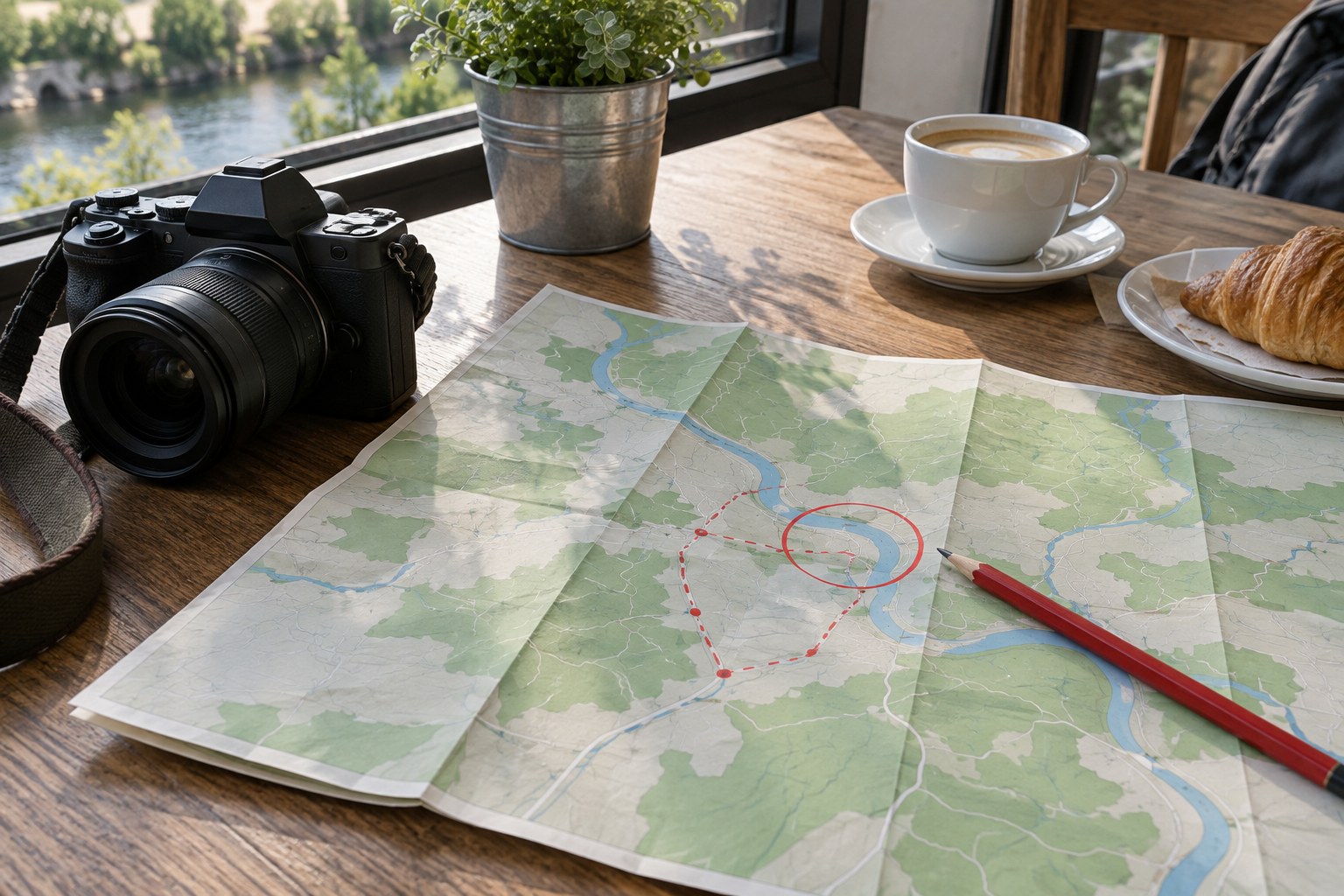
Choose a place close enough that travel does not consume the available time. A square, a small park or a single stretch of waterfront can provide a wide view, a detail and a changing activity. Check access, opening times where relevant and the weather before leaving. Set a clear return time so the final part of the outing does not become hurried.
Give the visit one main question, such as how afternoon light crosses the square or how a path connects different parts of a park. Bring equipment that serves that question. A familiar camera and one suitable lens may be enough, with weather protection and essential spare power as needed. Do not turn a short observation exercise into a test of every accessory you own.
Divide the time by attention
Use the first part to walk and observe without immediately committing to the first frame. Identify the strongest light and the clearest background. Spend the middle portion developing one or two compositions, changing position and timing rather than collecting many unrelated views. Reserve a few minutes to review whether the intended subject is actually visible in the photographs.
Make an establishing image if the location needs explanation, then look for a closer relationship that adds information. A detail of worn paving may belong to the story if the main subject concerns use of the space. It is less useful if you include it only because every outing seems to require a close-up.
If the expected light does not arrive, change the question within the same location. Study reflections, repeated forms or sheltered details instead. Keep the alternative specific. Wandering farther in search of a better scene can consume the time you intended to spend observing.
Afterward, select three photographs and write one sentence about what each contributes. If all three do the same thing, keep the strongest and note a missing view for a future visit. Record a useful time or viewpoint, but do not turn the note into an obligation to repeat the session exactly. A short outing succeeds when you understand one place a little more clearly and return with a small considered set.