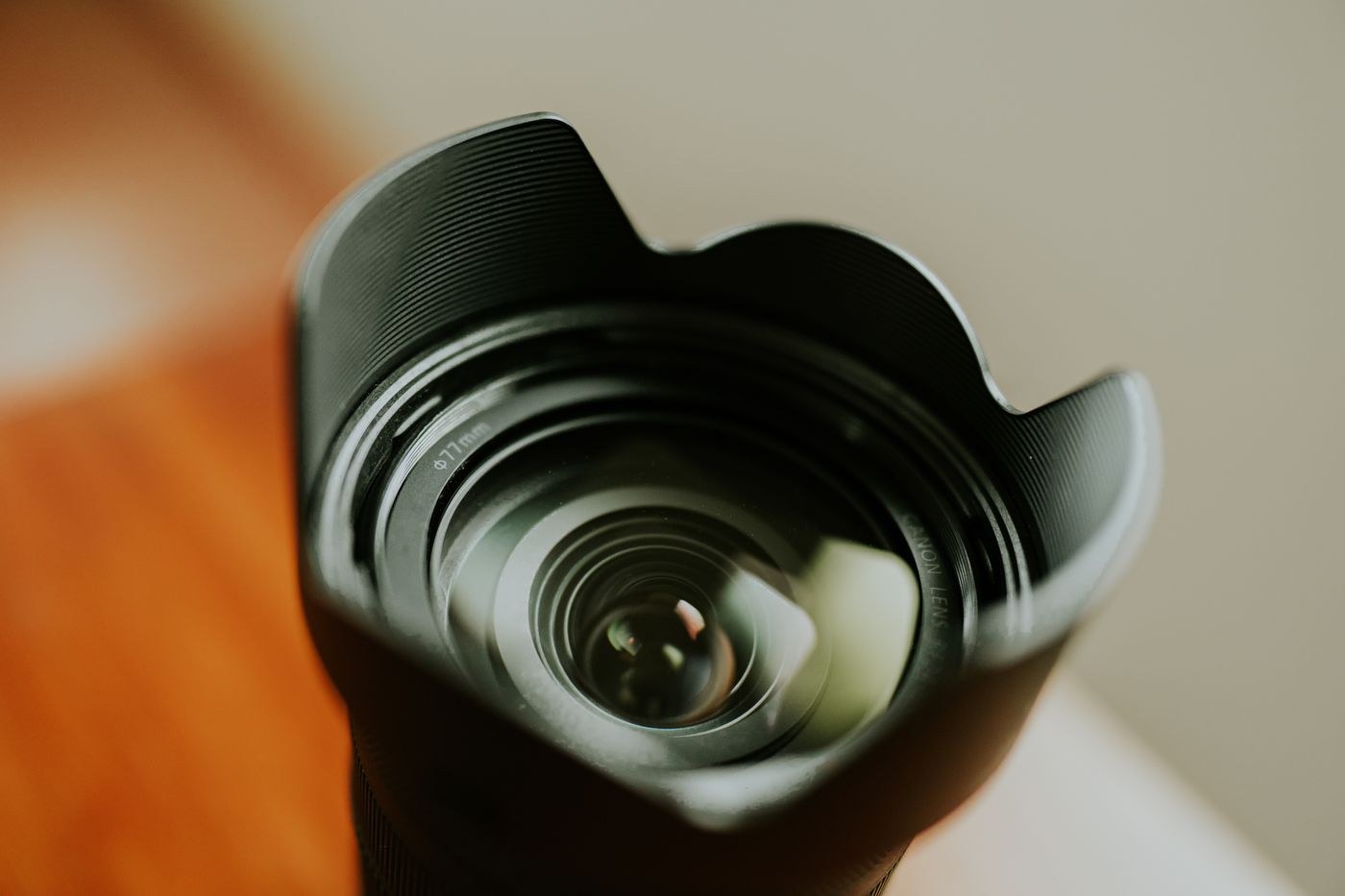
A lens hood shades the front of the lens from light arriving outside the intended view. That can reduce flare and loss of contrast, although it cannot remove every reflection or solve every backlit situation. It also places a small physical barrier in front of the glass, but it should not be treated as guaranteed impact protection.
Use the hood designed for the lens or one confirmed to suit its field of view. A hood that is too long can appear in the corners, especially at the wide end of a zoom. A petal-shaped hood must be aligned correctly. Check that it locks into place rather than sitting partly rotated.
Make a comparison in side light. Photograph the same scene with the hood correctly fitted and then removed, keeping exposure and framing consistent. Look for contrast changes, coloured ghosts and a washed-out area near the light source. The difference may be small in one scene and substantial in another; a hood's usefulness depends on where unwanted light enters.
When the sun or another bright source is inside the frame, the hood cannot shade it without also blocking the picture. Change the camera angle slightly or place the source behind a tree or building edge if flare distracts from the subject. Inspect the full image because a small movement can relocate a ghost reflection to an important area.
Watch for a hood shadow when using a built-in flash at close range. The lens and hood may block part of the flash illumination, creating a dark area near the bottom of the frame. Remove the hood if the equipment instructions and situation call for it, or change the lighting arrangement. Check the result rather than assuming the flash covers every combination.
A hood can make a front-mounted filter harder to reach. If you rotate a polariser, ensure that the adjustment does not loosen the hood or filter. Some designs provide access; others require temporary removal. Avoid forcing your fingers between components where you may touch the glass or cross-thread an attachment.
For storage, a reversible hood may fit backwards, but return it to its working position before photographing. A reversed hood does not shade the lens and may obstruct the focus or zoom ring. Inspect it after a knock for cracks or a loose mount. The useful habit is simple: fit it correctly, then remain alert to the few situations where it interferes.