Find a viewpoint where the bench's outline is distinct from the background. A dark bench against dark shrubs may vanish, while a slight movement can place it against pale grass or open water. Do not move public furniture for the photograph. Work with the available position and keep the path usable for other visitors.
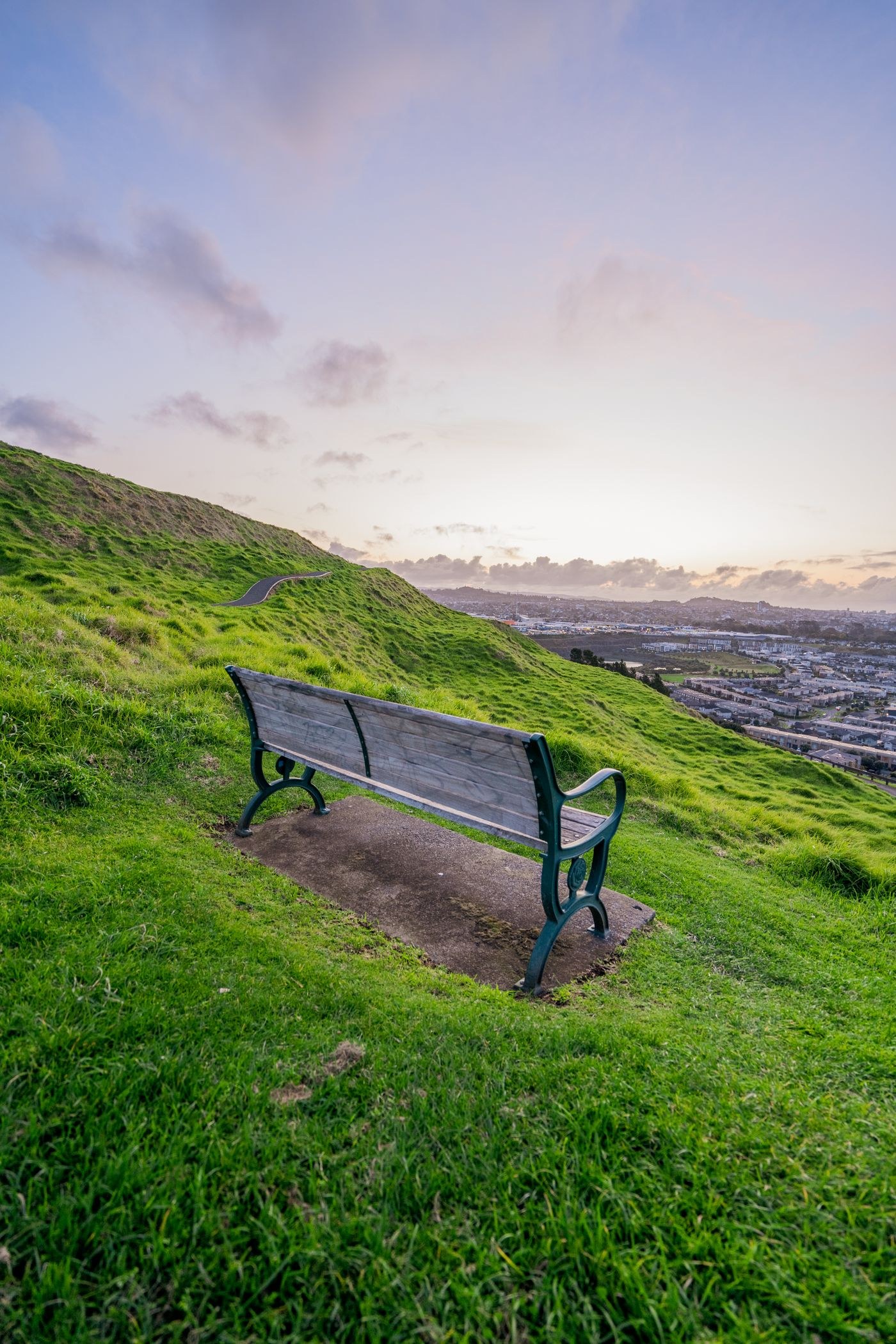
Decide how much scale information is needed. A small bench beneath a large tree can emphasise the tree's size. A bench filling the foreground makes the landscape feel like a view from a seating place. These are different photographs. Choose the relationship before deciding that the bench must sit on a particular compositional grid line.
Connect it to the surrounding space
Look at the direction the bench faces. Space in front of it can imply a view and give the image a natural orientation. If it faces out of the frame, the composition may feel unresolved unless that tension is intentional. A path leading toward the bench can help explain its location, but should not become a second competing subject.
Camera height changes the relationship. A low viewpoint may make the bench dominate and hide the ground beyond it. A higher view can show the distance between the bench and a lake or tree. Make small changes and watch the background through the seat and legs, where bright fragments can create distracting shapes.
If someone is seated there, ask before making them a prominent identifiable subject. Their presence changes the photograph from an object providing scale to a scene involving a person. Leave room for them to use the space normally rather than directing an unplanned portrait. An empty bench is sufficient when the purpose is simply a size reference.
Check focus and exposure according to the relationship you chose. If both bench and distant landscape matter, make sure the depth of field supports them. During editing, avoid brightening the bench so strongly that it overwhelms the scene. The viewer should understand the landscape's scale through the familiar object, not stop at an artificially emphasised piece of furniture.