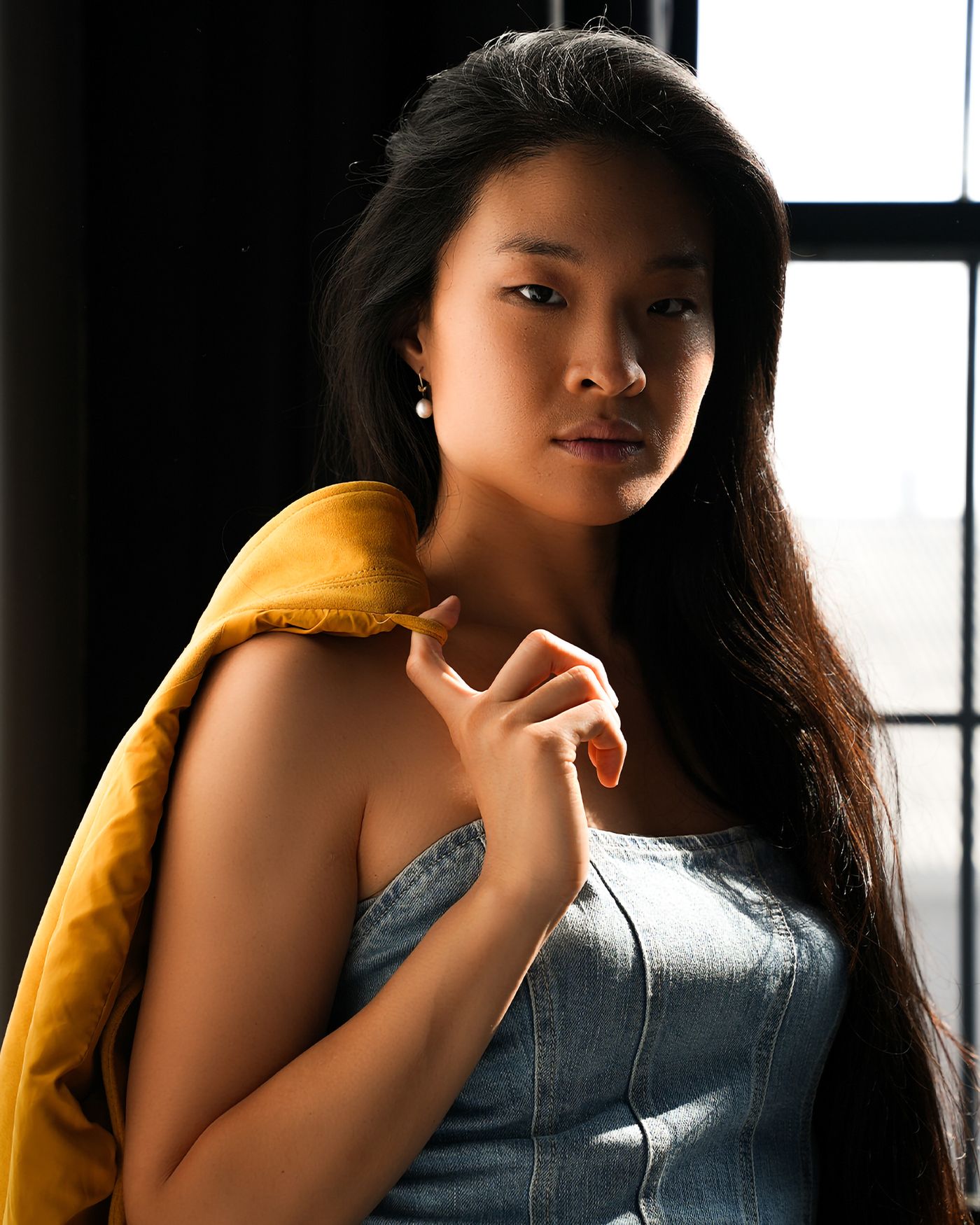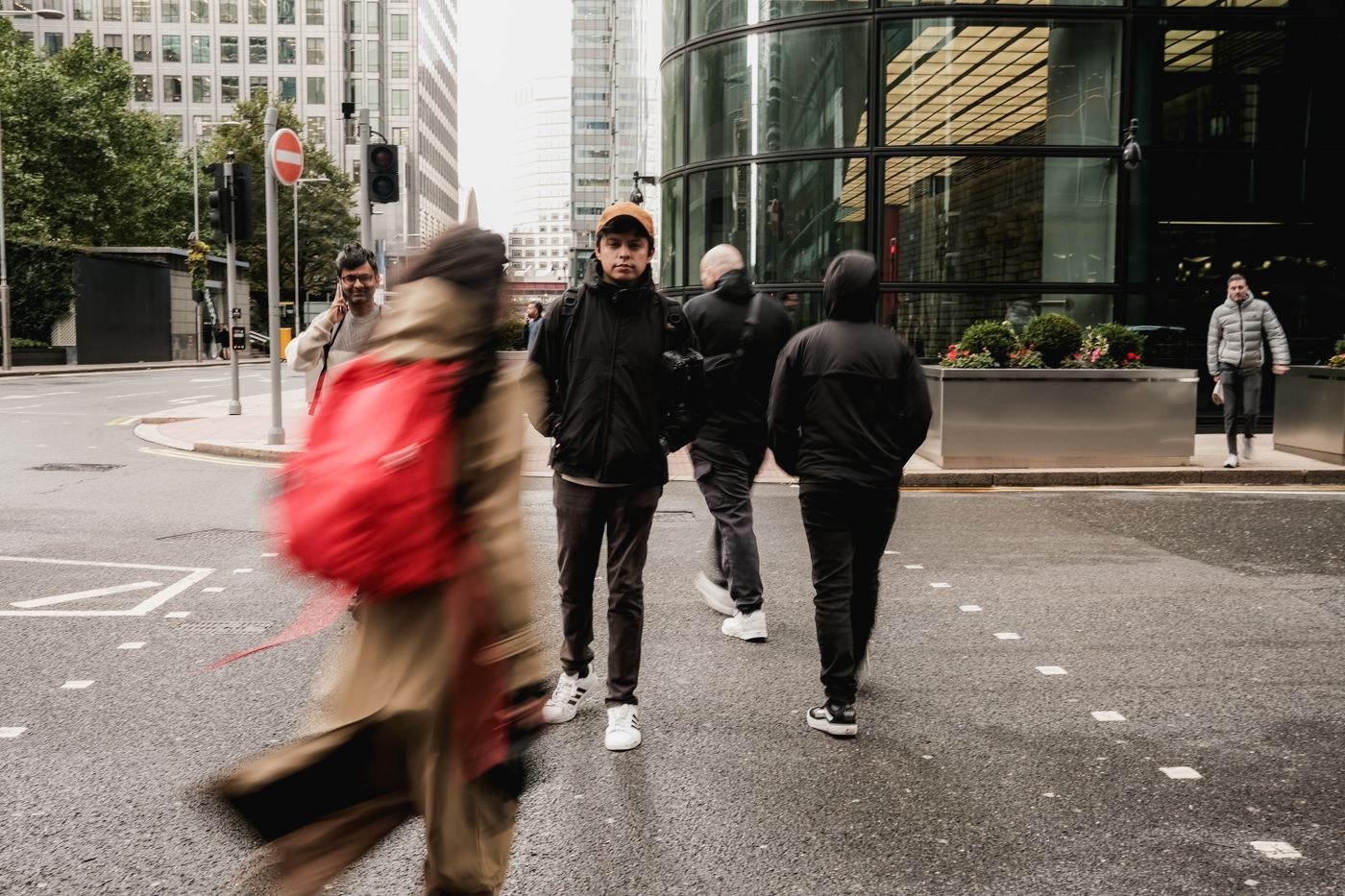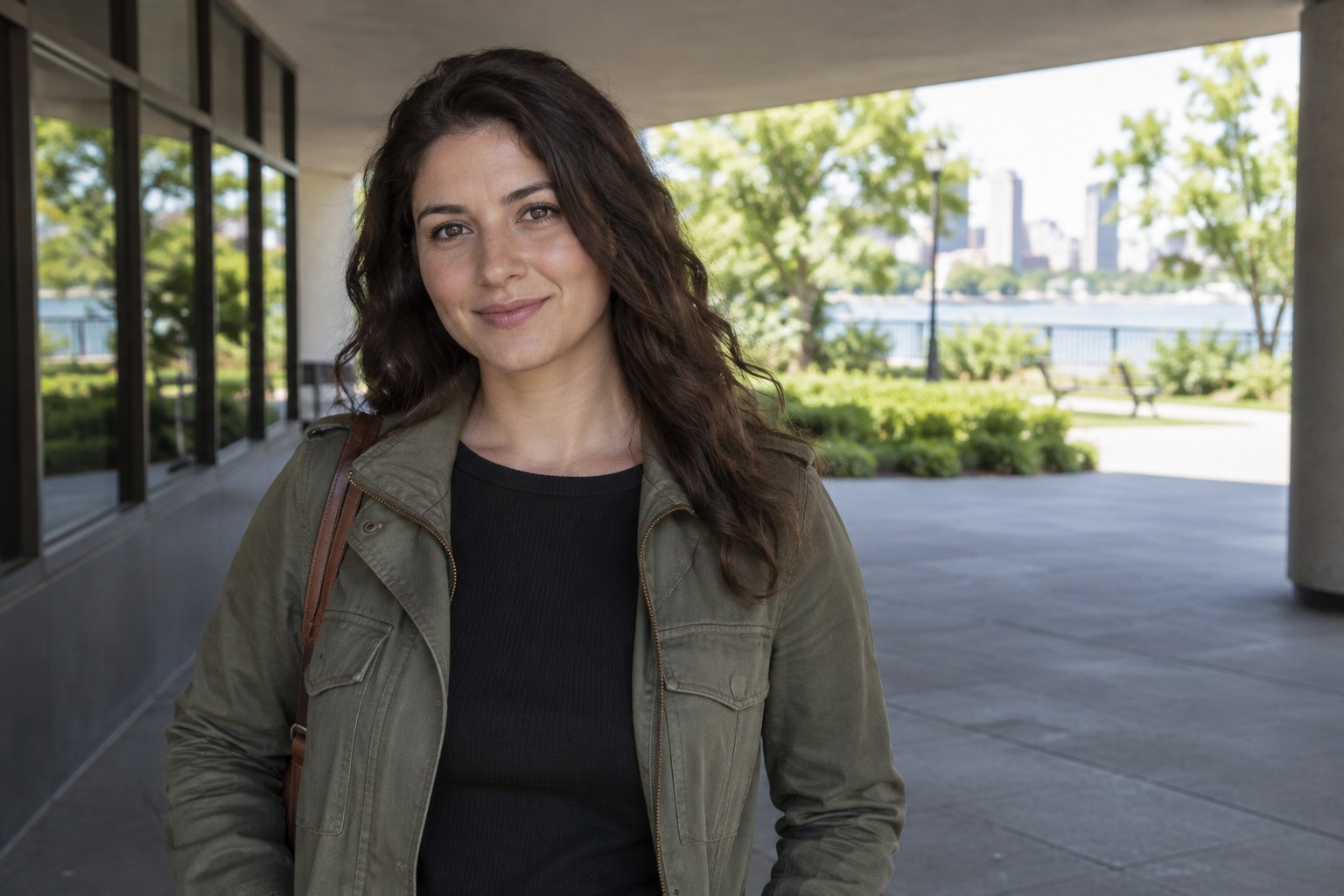
Not every shaded place produces the same portrait light. Deep beneath a dense tree, a face may receive little light from above and a strong green reflection from surrounding leaves. Near the edge of a building's shade, the person can face a large area of bright sky without standing in direct sun. That second arrangement is often easier to control.
Stand where you expect the person to stand and look towards the camera position. A broad view of the sky usually gives more useful frontal light than a view blocked by a wall. Place the person entirely inside the shade; a small patch of sun on a forehead or shoulder can become the brightest and most distracting part of the picture.
Turn the face a little from side to side and watch the eyes. You are looking for a position where the eyes remain visible and the nose shadow does not become an unwanted stripe. The background should be considered at the same time. A sunlit pavement behind a shaded face may be too bright even though the portrait light itself looks gentle.
Check reflected colour
A red wall, green lawn or blue canopy can send coloured light into the shaded side of a face. A white-balance adjustment may improve the overall colour but cannot always remove a cast that affects only one part of the skin. Move away from the coloured surface or change the angle before relying on editing. A plain neutral surface nearby can provide a cleaner reflection.
Keep exposure tied to the face. If the camera includes more bright background as you reframe, its automatic reading may darken the person. Check a test image after a large composition change. In stable light, locking an appropriate exposure or using manual settings can keep a sequence consistent; remember to recheck when you move to another patch of shade.
Open shade can still be dim enough for movement blur, especially late in the day. Choose a shutter speed that suits the person's movement and allow ISO to rise if needed. A wide aperture can separate the background, but ensure that both eyes have the degree of sharpness you want. Gentle light does not compensate for focus falling behind the face.
Before leaving the location, compare a close portrait with a wider frame. The wider view may introduce bright gaps in foliage or a sunlit sign that was absent from the close crop. Fix those edges by moving a little, not by asking the person to hold an uncomfortable pose. The shade is a starting condition; the final picture still depends on a coherent face, background and expression.